This ChatGPT Deep Dive Review 2026 explores GPT-5.5 features, pricing, benchmarks, coding performance, and real-world AI use cases.
OpenAI’s GPT‑5.5 series isn’t just an incremental update. It’s a fundamental shift in what an AI assistant can do. The new default model, GPT‑5.5 Instant, cuts hallucinations by over 50 percent, raises AIME 2025 math scores from 65.4 to 81.2, and speaks with a tighter, more natural tone. On top of that, OpenAI has added Workspace Agents (autonomous, persistent task runners), a dedicated Personal Finance dashboard, and deeper personalisation via memory sources. Whether you’re a casual free user, a developer, or a large enterprise, ChatGPT in 2026 is more capable, more transparent, and more integrated into daily workflows than ever before.
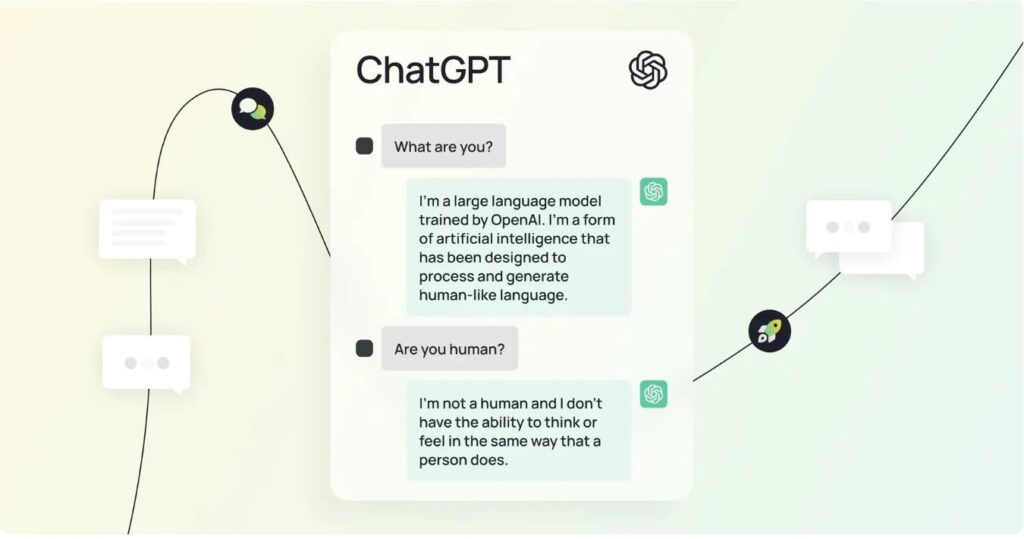
1. What Is ChatGPT? (The 2026 Picture)
ChatGPT is OpenAI’s conversational AI assistant, first launched in late 2022. It runs on the GPT‑5 family of models, one of the most powerful large language models ever built. As of 2026, it has over 900 million weekly active users and has grown from a simple chatbot into a platform that can write, code, research, generate images, create videos, run autonomous tasks, and even help manage your personal finances. The full product line now spans seven axes: language models (GPT‑5.5 series), a coding agent (Codex), video generation (Sora 2), a browser agent (Operator), image generation (gpt‑image‑1), speech recognition (Whisper), and vector embeddings (Embeddings). In short, ChatGPT in 2026 is a multi‑modal, multi‑surface ecosystem, not just a chat window.grok-ai-guide
2. The New Default Model: GPT‑5.5 Instant
On May 5, 2026, OpenAI made GPT‑5.5 Instant the default model for all ChatGPT users, replacing GPT‑5.3 Instant. Unlike the reasoning‑heavy GPT‑5.5 Thinking and Pro versions released in late April, the Instant model is designed as a fast, dependable “daily driver” for the hundreds of millions of people who use the chatbot every day.
2.1 Fewer Hallucinations, Better Facts
In high‑stakes fields such as medicine, law, and finance, getting the facts right is non‑negotiable. GPT‑5.5 Instant reduces false claims by 52.5% compared to its predecessor on prompts where accuracy matters most, and by 37.3% on especially challenging conversations flagged for factual errors. For the first time, an “Instant”‑series model also earned a High Capability rating from OpenAI in cybersecurity and bio‑chemical readiness categories, with extra safeguards against jailbreak attempts.gemini-3-5-flash-review
2.2 Shorter, Sweeter, Less Cringe
One of the most noticeable changes is the tone. GPT‑5.5 Instant uses roughly 30% fewer words and 29% fewer lines to deliver the same information. It cuts back on “gratuitous emojis,” over‑formatting, and unnecessary follow‑up questions — all while keeping the warm, approachable personality that users enjoy.
2.3 Smarter at STEM and Images
The model’s intelligence has also jumped across a wide range of tasks:
| Benchmark | GPT‑5.3 Instant | GPT‑5.5 Instant | Change |
|---|---|---|---|
| AIME 2025 (math) | 65.4% | 81.2% | +15.8 pts |
| MMMU‑Pro (multimodal) | 69.2% | 76.0% | +6.8 pts |
| CharXiv‑reasoning | 75.0% | 81.6% | +6.6 pts |
| GPQA | 78.5% | 85.6% | +7.1 pts |
It also performs better at analysing uploaded images and answering STEM questions, and it makes smarter decisions about when to search the web.
2.4 Personalisation and Memory Sources
For Plus and Pro users, GPT‑5.5 Instant can draw on past chats, uploaded files, and a connected Gmail account to tailor its responses. At the same time, OpenAI has introduced memory sources across all consumer plans: a small “Sources” icon lets you see exactly which saved memory, past chat, or file influenced a response. You can delete or correct outdated information on the spot. These sources remain private — they are not shown when you share a chat.grok-ai-guide
3. ChatGPT Pricing Plans in 2026
The days of a simple “free vs. $20” choice are over. ChatGPT now offers six tiers, and in the US, the free and Go plans include ads.
| Plan | Price (monthly) | Model | Key Limits & Features | Best For |
|---|---|---|---|---|
| Free | $0 | GPT‑5.3 Instant (fallback to mini) | 10 messages / 5 hours; ads in US | Casual, occasional use |
| Go | $8 | GPT‑5.3 Instant | ~10x Free volume; ads in US; no Deep Research | Light daily users |
| Plus | $20 | GPT‑5.5 (default) | Deep Research (10/mo); Sora (720p/5s); Codex; Agent Mode; ad‑free | Individual professionals |
| Pro ($100) | $100 | GPT‑5.5 + GPT‑5.5 Pro | 5x Plus Codex usage; longer, high‑effort sessions | Developers and power users |
| Pro ($200) | $200 | GPT‑5.5 + GPT‑5.5 Pro | 20x Plus Codex usage; 1M token context | High‑volume pros & researchers |
| Business | $25/seat (annual) | GPT‑5.5 + Codex | 2‑seat minimum; team controls; SOC 2; SAML SSO | SMB teams |
| Enterprise | Custom | Full suite | Maximum security; custom contracts | Large organisations |
A few notes:
- The new **100Proplan∗∗(launched9April2026)directlytargetsdeveloperswhoneedlongerCodexsessionswithoutpayingforthefull200 tier.
- On the API side, GPT‑5.5 costs 5.00permillioninputtokens∗∗and∗∗5.00permillioninputtokens∗∗and∗∗30.00 per million output tokens. Subscriptions include zero API credits.
Verdict: For most professionals, **ChatGPT Plus (20/month)∗∗remainsthesweetspot.The100 Pro plan makes sense if you regularly hit Codex limits, while the $200 Pro is for high‑volume research or agentic workflows.
4. New Features in 2026
4.1 Workspace Agents (April 2026)
This is arguably the most significant addition since Custom GPTs. Workspace Agents are persistent, autonomous assistants powered by OpenAI’s Codex model. Unlike a normal chat, they run in the cloud, so they can keep working even when you’re offline. They can connect to external apps, retain information across projects, and complete multi‑step workflows without repeated prompts.grok-ai-guide
- How to use them: Create an agent from a new tab in ChatGPT by describing a desired workflow. The system helps map the process, connect tools, and test the agent. Once active, agents can run on schedules or respond to specific triggers.
- Who gets it: Available in research preview for ChatGPT Business, Enterprise, Edu, and Teachers plans. It was free until 6 May 2026, after which it moved to a credit‑based model.gemini-3-5-flash-review
4.2 Personal Finance Dashboard (May 2026)
OpenAI has launched a Personal Finance feature inside ChatGPT, initially for Pro users in the US. Through integration with Plaid, users can connect bank accounts, credit cards, and investment accounts. ChatGPT then provides a unified dashboard to track spending, investments, subscriptions, and upcoming payments. You can ask conversational questions like, “Has my spending increased recently?” or “Which subscriptions are still active?”. OpenAI says the feature will roll out to Plus users later, and further integrations with Intuit (for tax estimates, etc.) are planned.
4.3 Sora Video Integration and Agentic Commerce
ChatGPT can now create videos via Sora, accessible both at sora.com and directly within ChatGPT conversations. The feature is available to Plus and Pro subscribers. At the same time, OpenAI has introduced an agentic commerce layer that enables side‑by‑side product comparisons and richer product discovery inside the chat, signalling a push into retail and shopping use cases.
4.4 iPad Drag‑and‑Drop and More Images for Free Users
The ChatGPT iOS app now supports drag‑and‑drop on iPad, allowing users to move text, images, and files directly into other apps. Free users have also started seeing more inline images from the web in their answers (e.g., photos of famous people, places, or products) to make visual topics easier to understand.
5. ChatGPT vs. Gemini (May 2026)
| Aspect | ChatGPT (GPT‑5.5) | Google Gemini (3.1 Pro) |
|---|---|---|
| Default model | GPT‑5.5 Instant (May 2026) | Gemini 3.1 Pro (Feb 2026) |
| Context window | up to 1M tokens (Pro) | 1M tokens (standard) |
| Voice | Advanced Voice Mode with video – the only serious voice AI product | No equivalent |
| Video generation | Sora (720p/5s on Plus, higher on Pro) | Veo 3 (available to paid subscribers) |
| Image generation | GPT Image 1.5 | Imagen 4 (tie on quality) |
| Web search | Uses Bing; less seamless | Native Google Search integration |
| Ecosystem | 60+ app connectors; Custom GPTs | Deep Google Workspace integration |
| Pricing (standard tier) | $20/month (Plus) | $19.99/month (AI Pro) |
| Best for | Complex, multi‑domain tasks | Research‑heavy, multimodal workflows |
The short version: ChatGPT remains the strongest general‑purpose writing and reasoning model. For creative writing, voice interaction, and agentic automation, ChatGPT wins. However, for research‑heavy tasks deeply tied to Google’s ecosystem, Gemini is a close competitor. The two platforms are now so close on raw benchmarks that the choice largely comes down to ecosystem fit.

6. Coding Performance: A New Frontier
6.1 Breaking ProgramBench
On May 13, 2026, OpenAI announced that GPT‑5.5 became the first AI model to solve a problem from ProgramBench — a “hell‑level” benchmark where all other frontier models previously scored 0%. ProgramBench tasks require the model to rebuild a compiled executable from scratch, given only the binary and documentation — no source code, no reverse engineering, no internet.
GPT‑5.5 cracked the first problem (cmatrix, the classic “Matrix digital rain” terminal program). Even more impressively, its high reasoning mode solved it in C, while the xhigh mode solved it in Python, passing all behavioural tests for both languages. The model used 10–27 exploratory steps to map CLI behaviour, then wrote the full implementation. This marks a fundamental leap from “fix a bug” to “build a program from zero.gemini-3-5-flash-review
6.2 Benchmarks and Efficiency
On standard coding benchmarks, GPT‑5.5 scores 82.7% on Terminal‑Bench 2.0 and 58.6% on SWE‑Bench Pro. It also beats GPT‑5.4 on OpenAI’s internal Expert‑SWE evaluation for long‑horizon coding tasks, all while using fewer tokens. On Artificial Analysis’s Coding Index, GPT‑5.5 delivers frontier‑level intelligence at roughly half the cost of competing models.
For developers, this translates directly into faster, more reliable code generation, refactoring, and debugging — whether you’re using Codex in VS Code, the CLI, or the dedicated desktop app.
7. Real‑World Use Cases
| Use Case | Why ChatGPT Excels |
|---|---|
| Creative writing | Unmatched natural prose, tonal range, and handling of nuanced instructions |
| Long‑form research | Deep Research mode (10 runs/month on Plus); memory sources to track context |
| Coding & automation | Codex + Workspace Agents + 60+ app connectors |
| Video & image creation | Sora (720p/5s) and GPT Image 1.5 built in |
| Voice‑first interaction | Advanced Voice Mode with video – still unique among major chatbots |
| Personal finance | New finance dashboard (Pro, US) with Plaid integration |
| E‑commerce | Agentic commerce layer for side‑by‑side product comparisons |
Within OpenAI’s own operations, more than 85% of staff use Codex every week, across software engineering, finance, communications, marketing, and data science. Examples include a communications team analysing six months of speaking request data, a finance team reviewing 71,637 pages of tax forms, and an automated weekly business report that saved one employee 5–10 hours per week.
8. Limitations and Honest Drawbacks
- Cost complexity – With six tiers, ads on free/Go in the US, and a separate API pricing model, it’s easy to be confused about what you actually get.
- Context window – While the 200Proplanoffers1Mtokens,standardPlususersarestilllimitedtoroughly320pagesoftext(128Ktokens).Geminioffers1Mtokensonits20 plan.
- Hallucinations persist – Even though false claims dropped by over 50%, the model still makes mistakes, especially on very niche or recent topics.
- Video generation limits – Sora on Plus is capped at 720p and 5 seconds; higher resolutions require Pro.
- Personal Finance is US‑only and Pro‑only – Broad availability is planned, but not yet rolled out.
- Ads on free tier – In the US, free users see ads (a significant change from earlier years).grok-ai-guide
9. The Road Ahead: What’s Coming Next?
OpenAI’s 2026 roadmap suggests ChatGPT is evolving into a creative infrastructure platform:
- Workspace Agents will move from research preview to general availability, with a credit‑based pricing model.
- Personal Finance will expand beyond Pro users and possibly integrate with Intuit for tax and stock‑sale calculations.
- Sora 2 is already stable, and longer‑form video generation may become available.
- Operator (a browser agent) is in development, aiming to automate web‑based tasks like booking flights or filling forms.
- Deeper Canva‑style design tools could emerge, given the parallel release of a dedicated image‑generation model (gpt‑image‑1).

10. Conclusion: Is ChatGPT Worth It in 2026?
ChatGPT remains the most versatile AI assistant on the planet.
If you need an all‑in‑one tool that handles writing, coding, research, voice, images, video, and autonomous agents — all in the same interface — ChatGPT is the obvious choice. The free tier is more limited than before (ads, tighter message caps), but for $20 a month, ChatGPT Plus delivers an enormous amount of value: GPT‑5.5, Deep Research, Sora, Agent Mode, Codex, and an ad‑free experience.
The only scenarios where you might prefer Gemini are if you live inside Google Workspace, process very long documents routinely, or need cost‑effective API access at scale (Gemini’s API is roughly 50% cheaper). For everyone else, ChatGPT is the best AI companion you can get in 2026.gemini-3-5-flash-review
Meta Description: Complete 2026 ChatGPT review covering GPT-5.5 Instant, pricing plans (Free, Plus, Pro), new features (Workspace Agents, Personal Finance, Sora), coding benchmarks, and comparisons with Gemini.
Last updated: May 2026